death is a verb · theoretical roots
The thinkers we keep company with — held lightly, as a composter leaves room for air.
We are grounded in Earth system science — how carbon, nitrogen, oxygen and water move through soils, waters, atmospheres and bodies — and wary of turning working models into dogma.
We do not claim to settle these questions. We treat them as openings and try to create spaces where science, story and lived experience can think together.
We also try to name sources honestly and are open to correction. Much of what now circulates as "new materialism" or "systems thinking" has been carried for millennia by Indigenous peoples. Where that is so, we name the foundational source — not its later translation.
→ Selah: A Báyò Akómoláfé Reader · Báyò Akómoláfé ↗
Akómoláfé extends the an-archive into the composting of knowledge itself — a space of radical incompleteness. His post-activism is not passivity but a refusal of the heroic story in which the right action, applied hard enough, sets everything right.
“The times are urgent; let us slow down.”— Báyò Akómóláfé, These Wilds Beyond Our Fences (North Atlantic Books, 2017); and the essay “The Times Are Urgent: Let Us Slow Down” (bayoakomolafe.net)
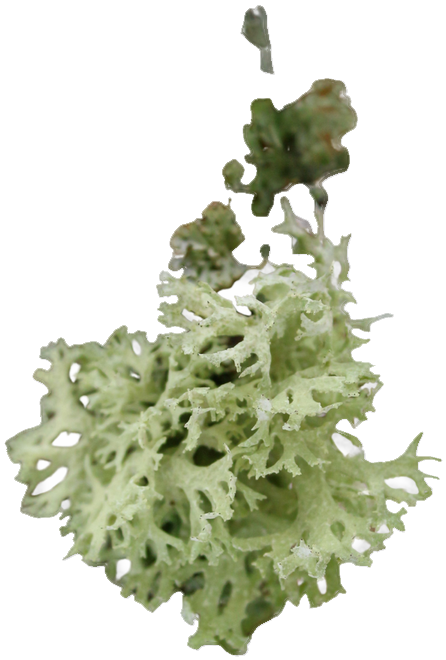
A small book of short stories that thinks the way this project hopes to. Its premise: the swirling script on tree bark is a book scattered across the whole forest, which no creature has ever managed to read. The lichens talk, and because talking for them means exchanging — air, moisture, news, thoughts — there is no word for I in the lichen language, only many ways to say we. Made within Neringa Forest Architecture, established at Nida Art Colony of the Vilnius Academy of Arts.
Barad’s quantum-informed philosophy shows that boundaries do not pre-exist relationships — they emerge through entanglement.
A geologist’s answer to the question-ing this site is named for.
In Bjornerud’s words, rocks are not nouns but verbs — visible evidence of processes: a volcanic eruption, the accretion of a coral reef, the growth of a mountain belt.— Bjornerud 2018, 8
If stone is a verb, nothing is exempt.
→ Wholeness and the Implicate Order · David Bohm ↗
Bohm proposed a rheomode — a verb-based language honoring reality as flowing process rather than static substance. Death is a verb is, in his terms, a rheomode proposition: not a state but an ongoing-ing.
→ Metamorphoses · Emanuele Coccia ↗
Every species is the metamorphosis of all those that preceded it — one and the same life cobbling together new bodies in order to exist differently. Death and birth are not opposites but a single life passing between forms.
→ God Is Red: A Native View of Religion · Vine Deloria Jr. ↗
Deloria (Standing Rock Sioux), a foundational figure of Native American studies, drew the distinction between religions oriented to time and those oriented to place — and insisted, decades early, that we are part of nature, not exempt from it.
→ Watercolor & ink · kristadragomer.com ↗
Krista created the work on our opening page. Her work is a root thought that arrived in pigment instead of prose. A body with no findable edge. Moss and animal and flower at the same time, mid-change, refusing to un-blur into any one of them. It is the reason this is a site you unfold rather than only read.
LINK HERE for Krista Dragomer on thinking-in-paint — audio, approx. 3 min recording to come · this note is visible on purpose until the link exists
Escobar gathers the decolonial work of Indigenous and Afro-descended peoples of Latin America into a generative claim: the world is not one but many — a pluriverse — and our designs, our institutions, even our deaths might be remade to honor that.
No animal is a self-contained organism. Every body is a holobiont: a host and its multitudes of microbial partners, developing, digesting and co-evolving together. Complex life itself arose this way. As it turns out, individuality, biologically, is the exception; symbiosis the rule. Their paper ends with a line the whole project could stand under: we are all lichens.
→ Queer Theory for Lichens · David Griffiths · UnderCurrents 19 (2015) ↗
Taking up that closing line, Griffiths asks what it means for our categories if no body is a single self. If we are all composites, the tidy binaries we sort the world into — self and other, nature and culture, and the ones imposed on sex and gender — begin to come apart.
Hannah-Jones’s Pulitzer-winning project re-dates the country’s founding to 1619 and re-centers the national story on those who bore slavery’s weight. We hold it here as a model of the work itself: that a founding story can be exhumed, examined and composted, and that doing so is repair rather than damage. The same refusal to sense runs through both the inequity this country was founded on and the fact of our being creatures of Earth — intra-related with the human and more-than-human world, which is precisely what an ecological death makes plain. Different refusals; the same turning-away.
→ Staying with the Trouble: Making Kin in the Chthulucene · Donna Haraway ↗
Haraway’s becoming-with names the choreography through which no body remains separate. We are made-with rather than self-made. From her we also take response-ability — not duty or blame, but the cultivated capacity to respond within the relationships that make us.
“It matters what thoughts think thoughts. It matters what knowledges know knowledges. It matters what relations relate relations. It matters what worlds world worlds. It matters what stories tell stories.”— Donna Haraway, Staying with the Trouble: Making Kin in the Chthulucene (Duke University Press, 2016), p. 35
→ Becoming Earth: How Our Planet Came to Life · Ferris Jabr ↗
Jabr gathers the science of a planet alive with process.
“The vast majority of chalk and limestone formations on Earth, including large sections of the Alps, are the remains of plankton, corals, shellfish, and other calcareous sea creatures. Every imposing edifice that humans have constructed with limestone, including the Great Pyramid of Giza, the Colosseum, Notre Dame and the Empire State Building is a secret monument to ancient ocean life.”— Ferris Jabr, Becoming Earth: How Our Planet Came to Life (New York: Random House, 2024), 91.
We cannot recommend this book highly enough. Jabr’s account of the great biogeochemical cycles and their mixing of carbon, water, nitrogen, and oxygen is among the most beautiful scientific descriptions of this whole worldview we know. The passage above is the seed of this project’s guiding image: that our monuments are ancient ocean life, held in stone.
Kimmerer’s work in the Potawatomi language reveals a grammar of animacy in which living beings are not it but who — where a bay does not merely exist but bays itself into being. To be is to verb. To re-cognize this is not to learn something new but to re-member something ancient.
→ Acoustic Territories: Sound Culture and Everyday Life · Continuum, 2010 ↗
Sound does what sight cannot: it crosses boundaries and blurs self from world. You cannot close your ears, and whatever you hear is already inside you. This underwrites the audio contemplations here — the wager that some things are reached only by attunement.
It is also why this is a site you listen to as well as read. The soul–soil continuum, that liminal place where psyche and matter interpenetrate, is easier to enter through the ear.
→ Is a River Alive? · Robert Macfarlane ↗
Macfarlane follows rivers and the people defending them to ask whether “life” might widen to include rivers, forests and mountains. He writes of wonder as a necessity for survival, of being companioned in the world, and of a river’s grammar: process not substance, commas not full stops.
Writing from between worlds — German and Guarani heritage — Machado de Oliveira names the “single story of forward” this foundation works to compost. She offers no quick fix, meeting modernity as a predicament to be accompanied rather than a problem to be solved.
→ The Minor Gesture · Erin Manning ↗
The Compost Heap is, in its bones, Manning’s idea.
Much of this grew in the SenseLab ↗, the Montréal laboratory Manning founded, where the an-archive was developed as collective practice rather than theory on a page.
→ Symbiotic Planet: A New Look at Evolution · Lynn Margulis ↗
Margulis showed that the complex cell is itself a merger: the mitochondria powering our every movement were once free-living bacteria that came to live inside another cell and stayed. Life’s great leaps came not from competition alone but from organisms learning to cooperate and live inside one another. Wah! Bacteria are our ancestors.
Menakem names white body supremacy as a trauma held in the body, not only in belief — and offers somatic abolitionism as the practice of moving with the discomfort of that unlearning rather than around it. Composting colonial boundaries is not only conceptual.
→ Dirt: The Erosion of Civilizations · David R. Montgomery ↗
Montgomery tells the history of civilizations through the living soil beneath them: societies that eroded their topsoil faster than it could form un-made themselves. Soil builds at roughly an inch every five hundred years; careless farming can strip centuries of it in under a decade. A composted body is one small repayment on that debt.
→ Dismantling the Master’s Clock: On Race, Space, and Time · Rasheedah Phillips ↗
Phillips asks who owns time, and at whose expense — showing how standardized, productionist time was built through colonialism and race, and how communities reclaim other temporalities. To compost the clock is part of the same work as composting the body back to soil.
→ Matters of Care: Speculative Ethics in More Than Human Worlds · María Puig de la Bellacasa ↗
Bellacasa reconceives soil not as a receptacle for crop nutrition but as a living multispecies world in need of urgent care. Soil ontologies and soil care are entangled: what soil is thought to be affects how it is tended. Her care time grounds this project’s commitment to slowing down.
More than a citation, this is a lineage, in large part where this foundation was seeded. Pye traces five ecological processes: energy exchange, diversity, decay and renewal, change, relationship and insists that psychological flourishing is inseparable from ecological flourishing.
The practice of psychological composting, at the heart of this project, was learned at the Viridis Graduate Institute ↗, alongside the MADA8 cohort. What is gathered here is a partial harvest of that shared ground.
To travel further, go to the source: attend a session, or undertake the doctorate. Viridis Graduate Institute ↗
→ The Treeline: The Last Forest and the Future of Life on Earth · St. Martin’s, 2023 ↗
The clearest account we know of death as an engine rather than an ending. Beetles enter the sapwood; fungi follow into the spaces they open; soil organisms convert the last of the lignin to soil. In any carbon cycle, death is what drives it.
A living tree is 5 percent living cells by volume, a dead one 40 percent, and in a virgin old-growth forest up to 40 percent of the entire biomass might be dead, supporting far more life.— Rawlence 2023, 25. Eight times more alive, by that measure, after it falls.
A teacher to many in this circle, Dr. Saltonstall names our deepest relationality to the living world, mammalsensing. It is her neologism for our co-evolved intelligence through which we smell rain before it falls and feel safety or threat before thought of it arrives. She diagnoses a Western “selective sensory amnesia,” and offers re-membering as repair.
→ Entangled Life: How Fungi Make Our Worlds, Change Our Minds & Shape Our Futures · Merlin Sheldrake ↗
Fungi unmake the bounded individual more thoroughly than almost any other beings on Earth. One of the most mindbending chapters is on lichen. We learn from Sheldrake that every single time anyone has asked how many organisms a lichen is, the honest answer has come back more than we thought last time. Which he suggests should tell us something about the question. Nobody ever found that boundary. We drew it, and then we kept having to move it.
→ Native American DNA: Tribal Belonging and the False Promise of Genetic Science · Kim TallBear ↗
TallBear, a Dakota scholar (Sisseton-Wahpeton Oyate), writes at the heart of this project’s question: the boundary between life and not-life. The Western insistence on a hard line between living and inert is a colonial inheritance, not a universal. TallBear names how this older Indigenous thought is repackaged as “new materialism.”
Todd, a Red River Métis scholar, wrote the essay that names this page’s whole commitment: that the European “ontological turn” draws on Indigenous knowledge while too often failing to cite it.
→ Our Word Is Our Weapon: Selected Writings · Subcomandante Marcos ↗
From the Indigenous, largely Maya communities of Chiapas who rose in 1994 comes one of this project’s guiding images: un mundo donde quepan muchos mundos — a world where many worlds fit. What scholarship later called the pluriverse was lived as autonomy long before it was theorized.
Additional roots in conversation: Édouard Glissant on Relation and opacity, Anna Tsing on the arts of noticing.
A book, an essay, a voice — someone else’s or one of your own — that helped you sense the living world differently. Offer it and the circle will consider it.
Please give at least a title.What happens next. Suggestions go to the Death Is a Verb
Foundation, who read every one and tend the list by hand. Offering a reading is the
beginning of a conversation, not a guarantee of inclusion — and nothing appears on
the site until a person has read it.
This form opens your own email app; we store nothing here, and there is no third party
in between. If your device has no mail app set up, use Copy instead and send it to
readings@deathisaverb.org yourself.